English and Japanese appear very different, but they are more similar than you think. There are thousands of words that Japanese has borrowed from English. Here are some university-level words that you probably already know: access (アクセス), benefit (ベネフィット), normal (ノーマル). You can even see the word topic (トピック) in this pamphlet (パンフレット). When Japanese people learn a new word like ‘pamphlet’, it is easier because they already know a lot about the word「パンフレット」: how it sounds, what it means, and so on. The brain keeps all that information in a network. The new English word can join that network, creating a strong connection.
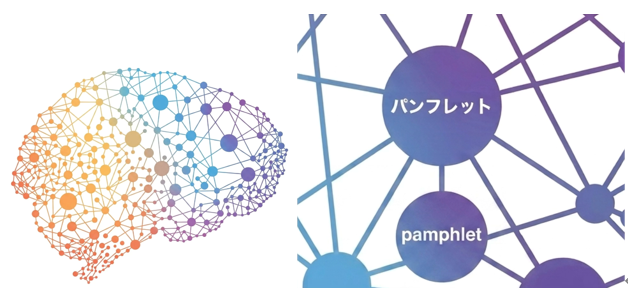
The Japanese vocabulary borrowed from English is a great potential resource for English learners in Japan. However, I am still trying to understand the best way for learners to access this resource. Many learners simply do not notice English-katakana pairs. Others connect them too much and make mistakes when the Japanese word is not a good match to the English one. Learners need some guidance.
Research has shown that with some training, learners are able to start noticing relationships between English and Japanese words more by themselves. But because there are so many katakana words, it would also be good if learners were directly shown which ones can benefit their English learning. Therefore, my research is focused on finding out exactly which words are useful and easy to learn, and how they can be presented to learners.
You cannot master English just from katakana. You need lots of practice with English. However, borrowed words could give Japanese speakers a vocabulary boost to make their English practice easier.
関連リンク
教員紹介

講師
Spring Mark
スプリング マーク
所属
共創情報科学部