Regional Development Center
Establishment and Goals of the Regional Development Center
On April 1, 2017, Nagano University transitioned from a private institution under the Nagano Gakuen School Corporation to a public university operated by Ueda City.Since becoming a public university, Nagano University has strengthened its collaboration with the local community by establishing the "Regional Development Center."This center serves as a new hub for contributing to regional development through education and research collaboration with industry, government, and the community. It plays a key role in building the "Regional Problem-Solving System" and the "Regional Talent Circulation System," which are essential components for the growth and success of public universities.
The Regional Development Center clarifies and organizes community contributions through education and research activities that focus on regional issues, which had previously emerged in a nascent form. The center acts as a coordinator, connecting local issues with the university's researchers and intellectual resources, integrating these with students' educational themes.
In advancing the resolution of regional challenges, it is important to create opportunities for community collaboration (community-based collaborative education), integrate various forms of knowledge and skills (specialized education), and teach sound judgment (liberal arts education). These three pillars form the foundation of our educational approach. Through the construction of the "Regional Problem-Solving System" and the "Regional Talent Circulation System," we aim to cultivate well-rounded professionals who will live and contribute to the region, helping address major local issues such as overcoming population decline, maintaining a stable and settled population, attracting young people, promoting industry, and developing talent. In doing so, we seek to enhance the region's overall strength.
Institute for Regional Symbiotic Welfare
Nagano University values the founding philosophy of "close ties with the local community" and aims for practical academic research. To help achieve this, a research institute was established as an affiliated institution in 2005, and in 2021, the only graduate school of social welfare in Nagano Prefecture was opened. While graduate schools share the educational aspect with undergraduate programs, they emphasize research, and students are expected to discover issues that have not been recognized before and consider solutions, rather than passively receiving knowledge from their professors.
Discovering, examining, and solving such issues often tends to be a personal, somewhat solitary task, but research confined to one's own shell quickly reaches its limits. Presenting your research awareness and actively receiving criticism from other researchers is indispensable for the development of research. At Nagano University Institute for Regional Symbiotic Welfare, we issue the "Journal of Regional Symbiotic Welfare" as a platform for such research presentations. Expressing your thoughts in written form and sharing them with many people becomes a major goal, but attention must also be paid not only to content but also to research ethics violations such as plagiarism. The institute addresses these issues through a peer-review system.
Moreover, research methods that form the basis for writing papers are not only conducted individually but also collaboratively. Not only researchers but also local governments and companies face many challenges. Responding to the demand for such external research and promoting research jointly with them is considered extremely important as the mission of Nagano University, which is closely linked to the community, and as the role of the institute. We intend to continue closely collaborating with local agencies and organizations to plan symposia and other events together, so we sincerely hope for your participation and cooperation.
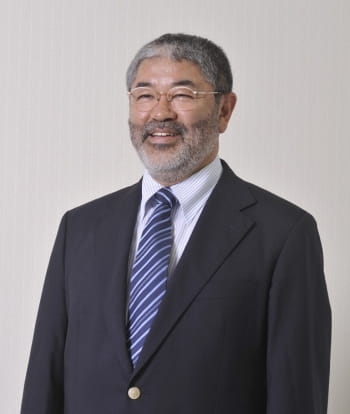
Hitoshi Miyahara
Director, Nagano University Institute for Regional Symbiotic Welfare
Introduction to the Research Institute
Anticipating the growing need for universities to contribute to local communities, Nagano University established the Institute for Regional Symbiotic Welfare in 2005. Since then, the institute has actively worked to promote community contribution in response to the needs of local society.
In 2021, we launched the only social welfare-focused graduate school in the prefecture, the Graduate School of Comprehensive Welfare Studies. As part of this effort, the Institute for Regional Symbiotic Welfare was reorganized under the Regional Development Center at Nagano University, allowing for more effective and integrated research and activities related to regional symbiotic welfare.
Starting in 2022, we have appointed faculty members from the Faculty of Social Welfare and the Graduate School of Comprehensive Welfare Studies as research fellows. Additionally, we have created a system that allows researchers from both inside and outside the university to participate as fellows and guest researchers. Graduate students can also join as research fellows, enabling them to engage in research.
Together, our team of researchers is committed to exploring the concept of "symbiosis" from diverse, multifaceted perspectives within the community. We aim to share our research and practical outcomes with local society and promote discussions through various projects.
- Promoting joint research with municipalities, companies, and organizations.
- Advancing collaborative research and partnership projects with local agencies and groups.
- Hosting research meetings, symposia, and other events related to regional symbiotic welfare.
- Publishing research journals, annual reports, and other academic publications.
- Engaging in research, consultation, and collaborative projects to promote regional symbiotic welfare.
- Carrying out other initiatives necessary to achieve the goals of the institute.